Monsoon-Proofing Your Verde Valley Home: An Insurance Agent's Pre-Season Checklist
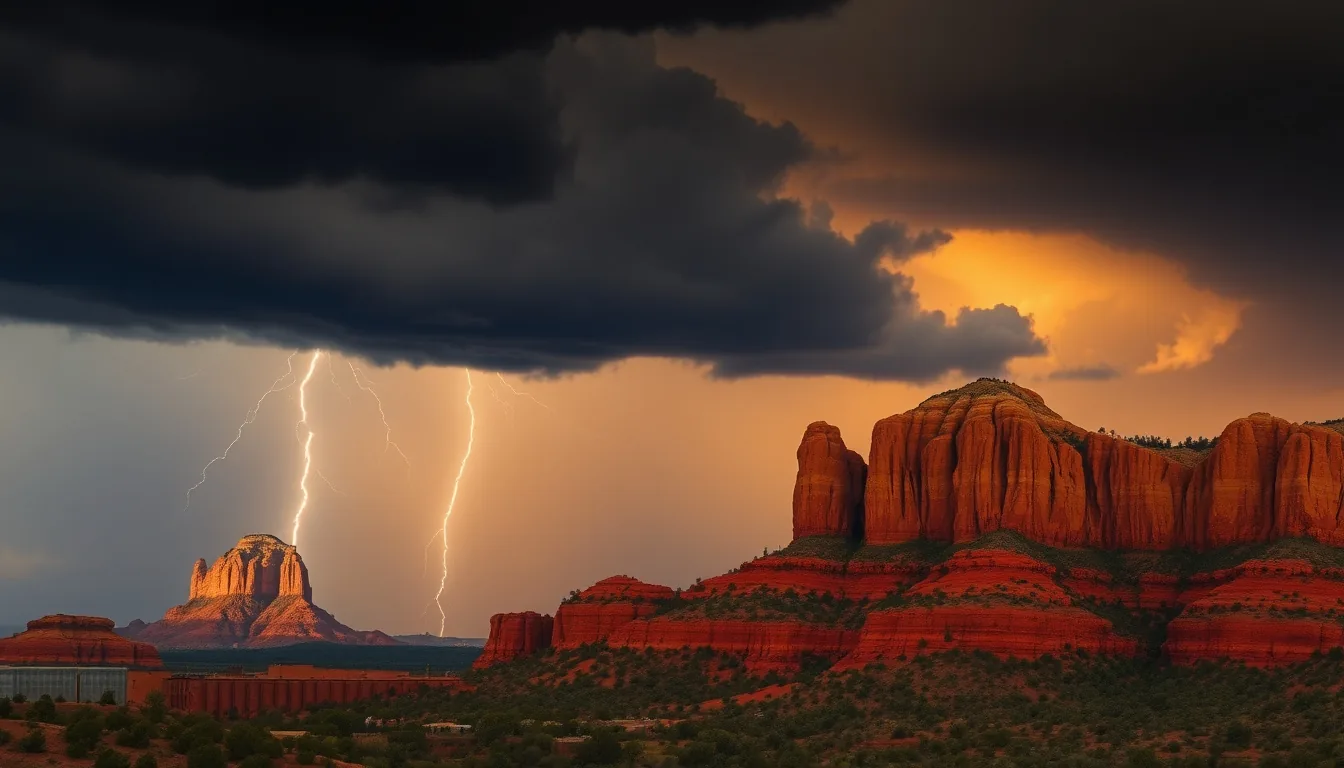
Arizona's monsoon season officially runs June 15 through September 30, and in the Verde Valley it is not subtle: violent downdraft winds, hail, lightning, and storm cells that can drop an inch of rain on Sedona or Cottonwood in under an hour. This year carries an extra hazard — the Pocket Fire burn scar north of Sedona — so the 2026 checklist matters more than most. Here is what an insurance agent wants you to do before the first big cell builds over the rim.
Know What Is Covered — and What Is Not
Standard homeowners policies handle most of what a monsoon throws at a house. Wind, hail, and lightning are covered perils, and rain that enters through an opening the storm created — a peeled-back roof section, a shattered window — is covered along with the interior damage it causes.
Two exclusions do the real damage to families every summer:
- Flood. Rising surface water, flash floods down a wash, mudflow, debris flow — excluded from every standard homeowners policy, no exceptions. Coverage requires a separate flood policy.
- Water and sewer backup. Water that backs up through drains or a sump during a deluge is excluded unless you carry a backup endorsement.
Also check your wind/hail deductible. Many Arizona policies carry a separate one, sometimes a percentage of your dwelling limit — on an $800,000 Verde Valley home, a 1% wind/hail deductible means the first $8,000 of a hail-shredded roof is yours.
Inspect and Document Your Roof Before the First Storm
The roof is where monsoon claims live or die. Before the season peaks:
- Have a roofer or handyman check for lifted shingles, cracked tiles, and failing flashing — the entry points a 60 mph outflow wind will find
- Clear debris from the roof surface, valleys, gutters, and scuppers so water actually leaves the roof
- Photograph the roof in good condition, dated, from multiple angles
Those photos matter twice. At claim time, they prove the storm caused the damage rather than long-term wear. At renewal time, they matter because carriers increasingly apply roof-age schedules that pay only actual cash value — depreciated value — on older roofs. If your roof is past 15 years old, ask us what your policy would actually pay on it today. The answer surprises people.
The NFIP 30-Day Waiting Period: Do the Math Backward
Flood insurance through the National Flood Insurance Program carries a 30-day waiting period before coverage takes effect. Monsoon season starts June 15. Work the math backward and the deadline is clear: buy flood coverage by mid-May, or the first storms of the season arrive before your policy does.
Buying mid-season still makes sense — the season runs into late September and burn-scar risk persists for years — but every day you wait is a day of exposure. Private flood carriers can sometimes bind faster than the NFIP; that is a conversation worth a phone call.
And do not assume your flood-zone status is what it was five years ago. FEMA, both counties, and the City of Sedona completed the Oak Creek remapping, with new flood maps effective March 21, 2023 on the Coconino County side and February 8, 2024 on the Yavapai County side, including part of the city. Properties moved both into and out of mapped high-risk zones. Check your parcel.
Burn-Scar Flash Flooding: The Pocket Fire Changed the Map
The June 2026 Pocket Fire burned over 26,000 acres north of Sedona, and the burn scar it left behind is now the region's most acute flood hazard. Fire-stripped slopes shed rain instead of absorbing it, sending water, ash, rock, and mud down the drainages below. This is not theoretical: in July 2026 the National Weather Service issued flash-flood watches and warnings for the Pocket Fire burn scar affecting Oak Creek Canyon, Slide Rock State Park, Sedona, and the Village of Oak Creek.
Two insurance facts to hold onto. First, insurers treat mudflow and debris flow as flood — excluded from homeowners policies but covered under an NFIP flood policy (mudflow specifically is covered; landslide is not). Second, more than a quarter of NFIP claims nationwide come from outside mapped high-risk zones, where preferred-risk pricing is comparatively cheap. If your home sits downstream or downslope of the burn scar, flood coverage belongs on your policy list this season regardless of what the map says.
Add the Water and Sewer Backup Endorsement
When a monsoon cell overwhelms drainage, water can come up through floor drains, showers, and sump systems — and standard policies exclude it. The water backup endorsement is one of the cheapest fixes in the book relative to the mess it covers. If you have a finished lower level, a casita below grade, or older drainage, ask for it by name at your next renewal.
Do Not Forget the Vehicles
Monsoon damage to cars — hail dents, flood water, a cottonwood limb through the windshield — is paid under the comprehensive portion of an auto policy, not collision. A liability-only vehicle gets nothing for any of it. Flash floods can total a car exactly where it sits parked, and elk and deer pushed by storms are real hazards on SR 89A and I-17, which also falls under comprehensive. If you dropped comprehensive on an older vehicle to save money, monsoon season is the time to reconsider.
If a Storm Hits: The Claim-Filing Playbook
- Make temporary repairs to prevent further damage — tarp the roof, move belongings — and keep every receipt; policies cover reasonable emergency measures
- Photograph everything before cleanup: roof, interior, water lines on walls, damaged contents
- Do not permanently repair or discard anything until the adjuster has seen it or approved it
- Report the claim promptly and keep a dated log of every call and email
- If you are displaced, track lodging and meal costs — additional living expense coverage applies to covered losses
Get a Pre-Season Policy Review
The best time to find a coverage gap is before the storm, not in the claim denial letter. We review Verde Valley policies every day — Sedona, Village of Oak Creek, Cottonwood, Cornville, Clarkdale, and Camp Verde — checking wind/hail deductibles, roof settlement terms, flood exposure against the new maps, and backup endorsements. Call 844-967-5247 and get it done before the next cell builds over the Mogollon Rim.
Want this handled by a local agent?
One application, multiple markets compared — including the specialty carriers that write red-rock country.