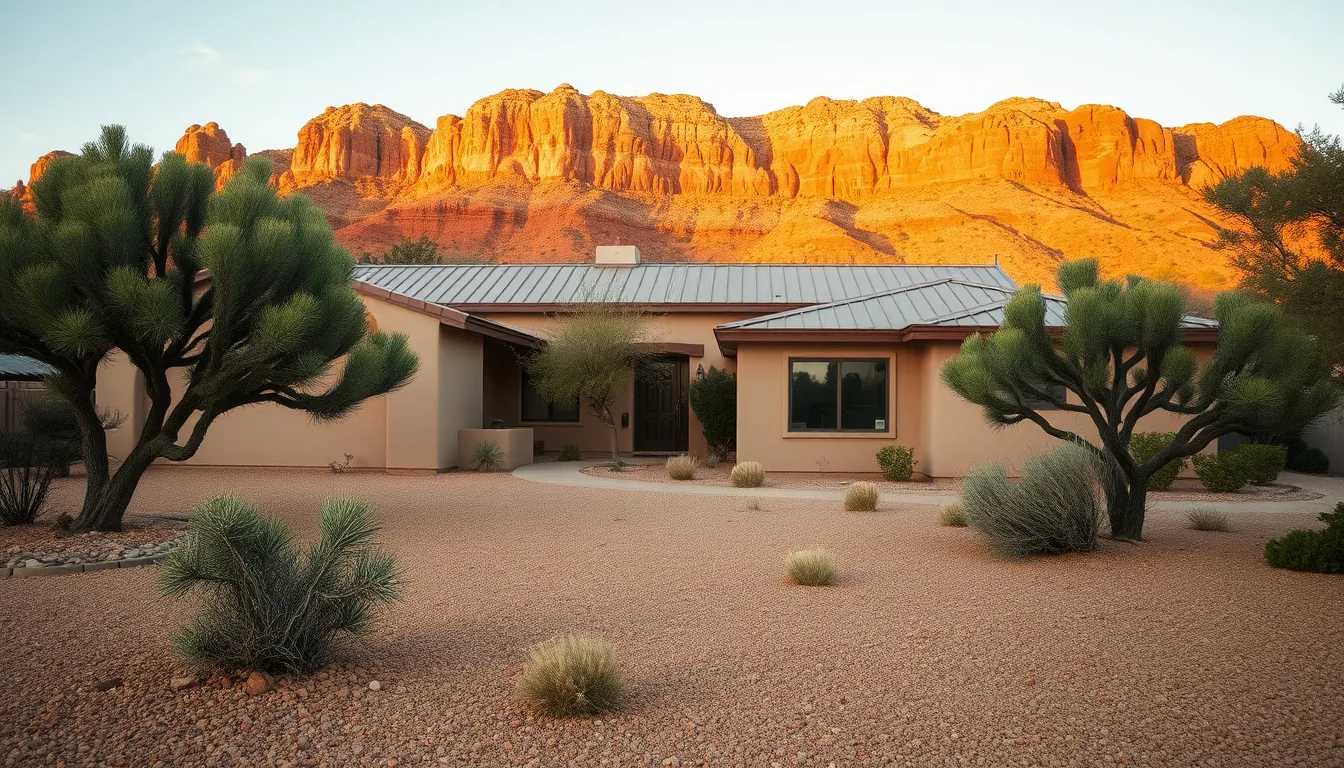
Dropped by Your Home Insurer in Arizona? A Step-by-Step Recovery Plan for Wildfire-Zone Homeowners
A non-renewal notice from your homeowners carrier reads like a verdict. It is not — it is the start of a process, and homeowners who work the process usually end up insured, sometimes on better terms than they had. Here is the step-by-step recovery plan we use with Sedona and Verde Valley homeowners, written by the people who do this re-shopping every week.
Why Non-Renewals Are Hitting Sedona and the Village of Oak Creek
Statewide, Arizona's homeowner non-renewal rate is genuinely low — about 0.8% in 2023, per a University of Arizona Cooperative Extension analysis, compared to 2.99% in Florida and 1.72% in California. But averages hide concentration: some Arizona counties have hit 4.8% in a single year, and the non-renewals cluster in wildfire-exposed pockets exactly like ours.
Locally, the pattern is unmistakable. Homes backing the Coconino National Forest boundary — the perimeter properties in Sedona, the Village of Oak Creek, and Oak Creek Canyon — are precisely where carriers' wildfire models score worst, and the Sedona Red Rock News reported in December 2025 that wildfire risk had already pushed local homeowner premiums up about 20% in recent years. After the June 2026 Pocket Fire burned more than 26,000 acres north of town and forced GO evacuations of Oak Creek Canyon, nobody local expects carrier appetite to loosen. If you got a notice, you are not being singled out — you are on the wrong side of a model. Models can be answered.
Step 0: Read the Notice and Mark Your Timeline
Your carrier must give you advance written notice before the policy terminates, and the notice states the reason. Both matter. The date defines your working window — typically weeks, not days, so use all of them. The reason tells you what to attack: wildfire exposure calls for mitigation documentation; roof age calls for an inspection or replacement quote; claims history calls for context an agent can present to the next underwriter.
Step 1: Whatever Happens, Do Not Let Coverage Lapse
This is the one unforced error that makes everything downstream worse. A lapse in coverage is an underwriting red flag that makes the next placement harder and more expensive. If you carry a mortgage, a lapse also triggers lender-placed insurance — dramatically more expensive coverage that protects the bank's interest, not your equity, your contents, or your liability. If the clock is running out, an agent can often bind bridge coverage; going bare, even for a week, is never the move.
Step 2: Re-Shop the Admitted Market — All of It
Carriers score wildfire risk parcel by parcel, and their models disagree with each other constantly. In Sedona, one company's declination genuinely does not predict the next company's answer — appetite varies street to street and model to model. This is where an independent agency earns its keep: one application, run across every admitted carrier we represent, before anyone starts talking about expensive alternatives. A meaningful share of the non-renewed homeowners who call us get placed right back in the standard market at step 2.
Step 3: Mitigate, Document, and Ask Again
If the admitted market balks, the highest-leverage move is physical mitigation with paperwork to prove it:
- Schedule a Fire Safe Sedona assessment — the city program offers free property risk assessments, and the written result is underwriting evidence
- Clear defensible space: nothing combustible within 5 feet of the structure, thinned and spaced vegetation from 5 to 30 feet, reduced fuels beyond
- Document the roof — a Class A fire-rated roof is the single strongest line on the application
- Install ember-resistant vents and photograph them
- If your neighborhood qualifies, push for Firewise USA recognition — the City of Sedona launched a 2026 program to certify subdivisions, and Canyon Mesa Country Club earned recognition after homeowners near the forest perimeter saw cancellations; some carriers extend credits or appetite to recognized communities
Dated photos, receipts, and the assessment report often flip a declination on re-submission. Underwriters do not reward intentions; they reward evidence.
Step 4: The Specialty and Surplus-Lines Markets
If the standard market still says no, Arizona's answer is different from California's — because Arizona has no FAIR Plan. There is no state-backed insurer of last resort, and no waiting list to join. The fallback is the surplus-lines (excess and surplus) market: specialty carriers built to write the risks admitted companies decline.
Set expectations honestly. E&S coverage for a hard-to-place wildfire home typically costs 20% to 50% more than a standard policy, deductibles run higher, and terms are narrower — read the wildfire provisions carefully. But it is real, mortgage-satisfying coverage, and plenty of canyon-edge homes in Sedona and Oak Creek Canyon are protected this way today. Placement requires an agent with E&S market access, which captive agents do not have.
Step 5: Work Your Way Back to the Standard Market
Surplus lines should be a bridge, not a life sentence. The path back: complete the mitigation list, keep the home claim-free, maintain continuous coverage, and have your agent re-shop the admitted market at every renewal. Carrier appetite shifts year to year, and a home that was declined in 2025 with no documentation is a different application in 2027 with a Firewise community, a Class A roof, and two years of clean history. We have made that round trip with clients, and the premium savings on the return leg are the reward for the work.
When to Call DIFI
The Arizona Department of Insurance and Financial Institutions (DIFI) regulates carriers and agents statewide. If you believe your non-renewal violated notice requirements, or a carrier is not following its own policy terms, DIFI handles consumer complaints and publishes homeowner guidance. We are licensed through DIFI and can help you use its resources — but for most non-renewals, the fastest fix is the market process above, not a complaint.
The Bottom Line — and a Phone Number
A wildfire non-renewal in Sedona or the Verde Valley is a solvable problem with a known playbook: protect the timeline, never lapse, re-shop everything, mitigate with documentation, use surplus lines as the bridge, and work back to standard. We run this playbook for homeowners from Oak Creek Canyon to Camp Verde every month. If a notice just landed in your mailbox, call us at 844-967-5247 today — the sooner we start, the more options you have.
Want this handled by a local agent?
One application, multiple markets compared — including the specialty carriers that write red-rock country.