The Complete Guide to Insuring a Home in Sedona: Wildfire, Monsoon & Red-Rock Realities
Sedona is one of the most beautiful places in America to own a home. It is also, quietly, one of the trickiest places in America to insure one. This guide covers everything we walk local homeowners through — wildfire scoring, non-renewals, the surplus-lines market, monsoon and flood exclusions, and how to get your rebuild numbers right in a town where homes sell for roughly $515 per square foot.
Why Sedona Is One of America's Trickiest Places to Insure a Home
Start with the raw numbers. The USDA's Wildfire Risk to Communities tool rates Sedona's wildfire risk higher than 95% of communities in the United States, and First Street's climate model puts essentially 100% of local properties at some degree of wildfire risk over a 30-year mortgage. Layer on a median single-family sale price of about $1.25 million as of mid-2026, and you have expensive homes sitting in one of the highest-scored wildfire zones underwriters see anywhere.
Then add the complications that do not show up in a national model. Sedona straddles two counties — Coconino to the north and east, Yavapai to the south and west — so flood maps, permitting, and county mitigation programs differ depending on which side of town you live on. Millions of visitors pass through every year, more than 1,100 homes operate as permitted short-term rentals, and a large share of the housing stock is second homes that sit vacant part of the year. Every one of those facts changes how a policy should be written.
The thesis of this guide is simple: beautiful does not mean simple. A Sedona homeowners policy bought like a Phoenix suburb policy — cheapest quote, default dwelling limit, no flood coverage, no mitigation documentation — is a policy waiting to fail. Here is how to do it properly.
Sedona's Wildfire Record: Slide, Rafael, and the Pocket Fire
Underwriters do not price Sedona on hypotheticals. They price it on a real and recent fire history, and it helps to know the three names that shaped local carrier appetite.
- Slide Fire, May 2014. A human-caused fire that burned 21,227 acres in Oak Creek Canyon between Sedona and Flagstaff, forcing evacuations in the canyon. Afterward, ADOT had to run flood-mitigation work along SR 89A — the first local lesson that fire and flood come as a package.
- Rafael Fire, June 2021. A lightning-caused fire that burned roughly 78,000 acres west of town, pushing toward Sedona from the Sycamore Canyon side and putting Sedona-area communities on evacuation notice. It proved that fire can threaten the city from directions residents did not expect.
- Pocket Fire, June 2026. Started June 19, 2026, about seven miles north of Sedona. It grew past 26,400 acres, triggered GO evacuation orders for Oak Creek Canyon, and closed SR 89A during peak tourist season, reaching roughly 76% containment by early July.
Each of these events taught underwriters something, and after each one, carrier appetite in the Sedona area tightened. The Sedona Red Rock News reported in late 2025 that wildfire risk had pushed local homeowner premiums up roughly 20% in recent years — and that was before the Pocket Fire. When a carrier's model gets refreshed with a new burn footprint a few miles from your parcel, your renewal reflects it.
How Insurers Actually Score Your Sedona Home
Most homeowners assume insurance risk is priced by ZIP code. In wildfire country, it is priced by parcel. Modern carriers run every address through wildfire risk models — Verisk, ZestyAI, and similar scoring engines — that evaluate your specific lot, not your neighborhood average.
The inputs that matter most in Sedona:
- Distance to wildland fuels, especially the Coconino National Forest boundary. Homes backing directly onto the forest perimeter carry the toughest scores in the area.
- Slope. Fire moves faster uphill, so homes perched above drainages and canyon edges score worse than flat lots.
- Vegetation density in the zones immediately around the structure — the model is effectively grading your defensible space from aerial imagery.
- Access. Long single-lane driveways and narrow canyon roads raise scores because they slow fire crews down.
- Roof and construction type, where the carrier has the data.
This parcel-level scoring explains a pattern that frustrates Sedona homeowners constantly: one street quotes fine with a standard carrier while the next street over gets declined outright. Two neighbors can receive wildly different outcomes from the same company. It is not arbitrary — it is the model — and it is exactly why shopping multiple carriers matters more here than almost anywhere else. Carrier appetite in Sedona is inconsistent from street to street, and an independent agency can run one application across many markets to find the company whose model likes your particular lot.
The Non-Renewal Playbook
Statewide, Arizona non-renewal rates are actually low — about 0.8% of homeowners policies in 2023, according to a University of Arizona Cooperative Extension analysis, versus 2.99% in Florida and 1.72% in California. But that statewide average hides the local story: some Arizona counties have hit 4.8% in a single year, and non-renewals concentrate in wildfire-prone pockets exactly like Sedona, the Village of Oak Creek, and Oak Creek Canyon.
If a non-renewal notice lands in your mailbox, here is the playbook:
- Read the notice date and reason. You have advance notice before the policy actually ends — use every day of it. The stated reason (wildfire exposure, roof age, claims) tells you what to fix or document.
- Do not let coverage lapse. A lapse in coverage makes you materially harder to place with the next carrier and can put a mortgaged home in forced-placed coverage, which is expensive and protects the lender, not you.
- Re-market immediately. An independent agent re-shops the admitted market first — carrier appetite varies enough that a declination from one company genuinely does not predict the next.
- Document mitigation. A Fire Safe Sedona assessment, photos of cleared defensible space, and roof documentation often flip a declination into an offer. Underwriters respond to evidence, not promises.
- Escalate to specialty and surplus-lines markets if the admitted market says no — more on that next.
Non-renewal is a problem with a process, not a catastrophe. We walk Sedona homeowners through it every month.
No FAIR Plan in Arizona: The Surplus-Lines Reality
Here is the fact that surprises almost every homeowner who moves here from California: Arizona has no FAIR Plan. There is no state-backed insurer of last resort. If every standard carrier declines your home, the fallback is the surplus-lines market — also called excess and surplus, or E&S.
Surplus-lines carriers are specialty insurers that write risks the standard (admitted) market will not touch. For a hard-to-place Sedona home, E&S coverage typically runs 20% to 50% more than a standard policy, often with narrower terms: higher wildfire deductibles, more exclusions, and fewer built-in extras. It is real coverage — many canyon-edge and forest-perimeter homes in Sedona are insured this way right now — but it should be treated as a bridge, not a destination.
Two practical points. First, surplus-lines placement requires an agent with E&S market access; a captive agent representing one carrier simply cannot do it. Second, the goal is always to move back to the admitted market. Complete mitigation work, document it, keep the home claim-free, and re-shop at every renewal. We have moved clients from E&S back to standard carriers after a Firewise certification and a season of defensible-space work. The absence of a FAIR Plan makes that round trip your responsibility — and ours.
Hardening Your Home So Carriers Say Yes
The single most productive thing a Sedona homeowner can do for insurability is physical mitigation, properly documented. Carriers increasingly reward it, and in borderline cases it is the difference between an offer and a declination.
- Get a Fire Safe Sedona assessment. The city's program offers free wildfire risk assessments of your property. The written result doubles as evidence on an insurance application — it is the cheapest underwriting document you will ever obtain.
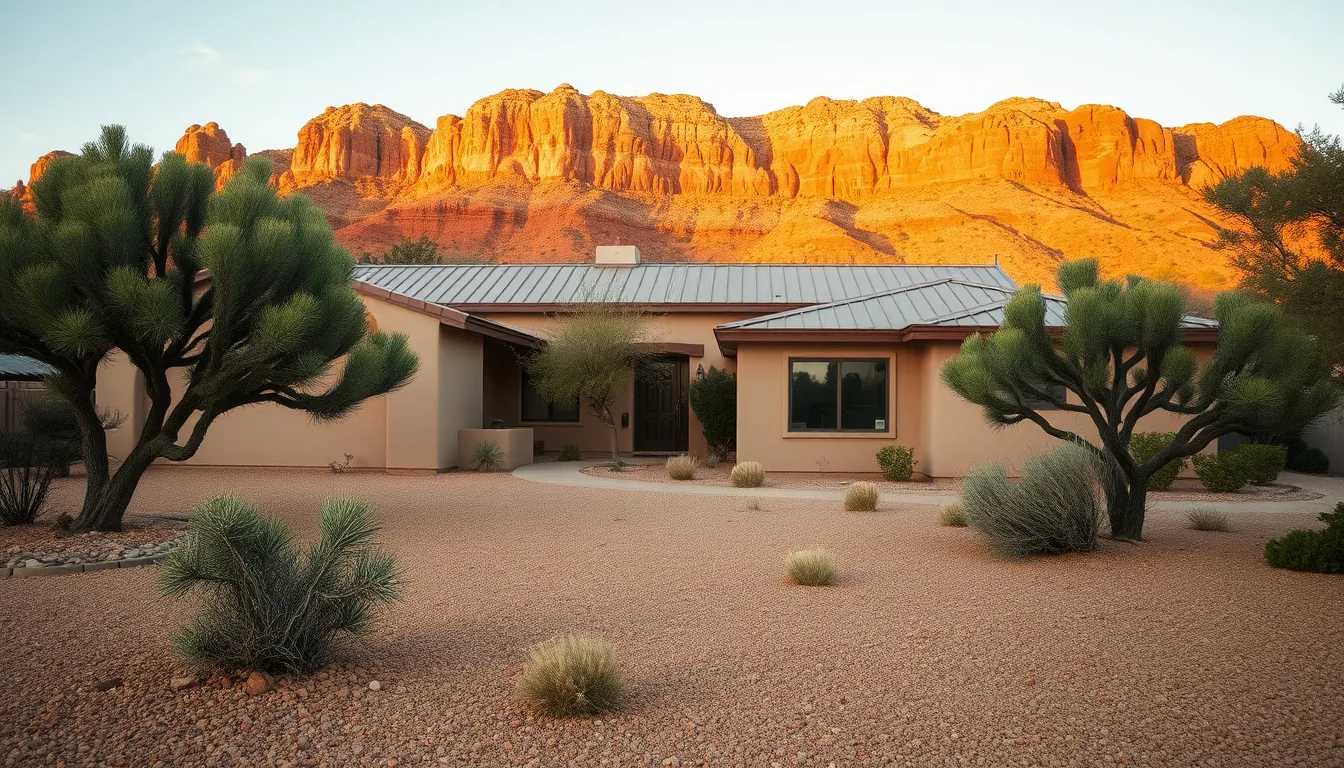
- Work your defensible-space zones. Zone 0 (0 to 5 feet from the structure): no combustible mulch, no shrubs against walls, nothing under decks. Zone 1 (5 to 30 feet): thinned, spaced, and irrigated plantings. Zone 2 (30 to 100 feet): reduced fuel density and ladder fuels.
- Upgrade the roof. A Class A fire-rated roof is the highest-value hardening investment on most homes, and carriers ask about it directly.
- Install ember-resistant vents. Most homes lost in wildfires ignite from wind-blown embers, not the flame front. Fine-mesh or ember-rated vents close the most common entry point.
- Push your neighborhood toward Firewise USA status. The City of Sedona launched a program in 2026 to help subdivisions earn Firewise recognition, and City Council named wildfire mitigation a top priority for the year. Canyon Mesa Country Club's HOA earned Firewise status in 2026 after homeowners near the forest perimeter saw policy cancellations — and community-level recognition can help with both availability and pricing, because several carriers offer credits for Firewise membership or will write homes in recognized communities they would otherwise decline.
Photograph everything, date the photos, and keep receipts. Mitigation that is not documented does not exist as far as an underwriter is concerned.
Monsoon Season: The Other Half of the Risk
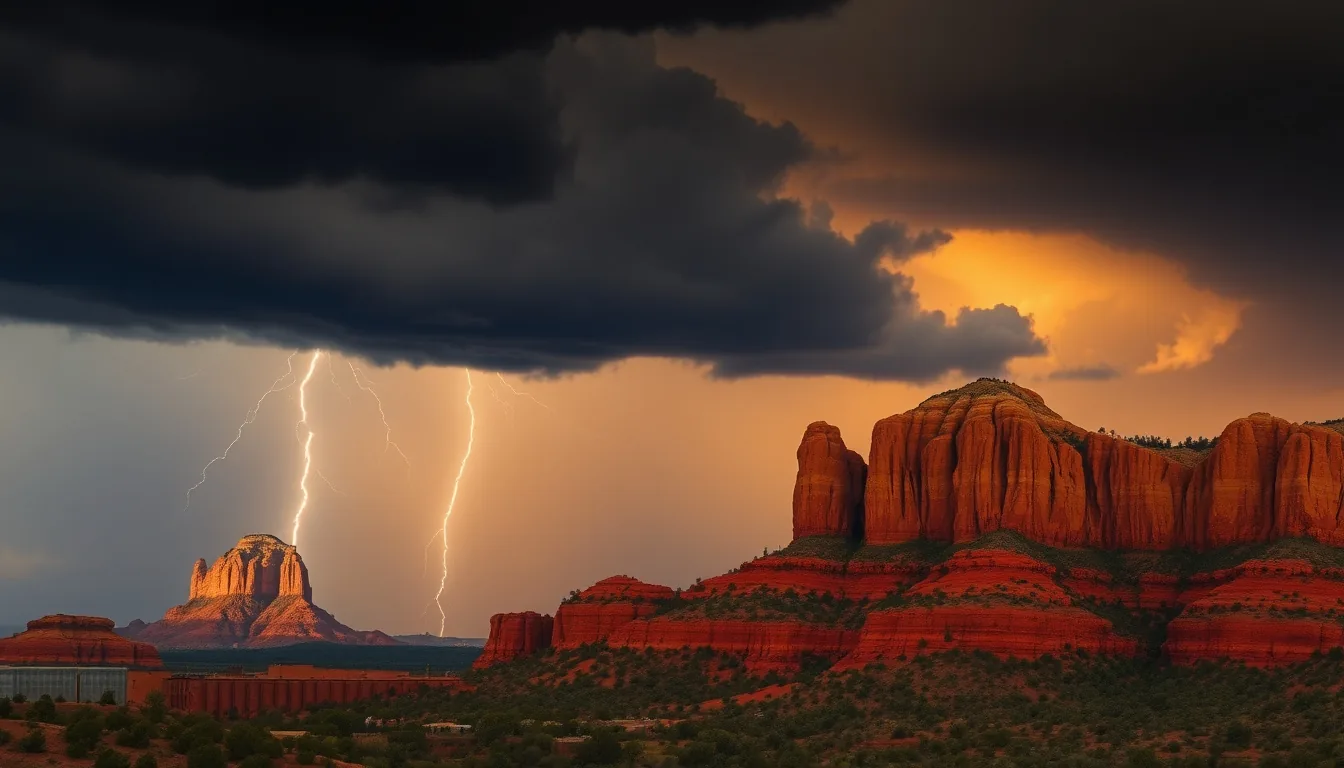
Wildfire gets the headlines, but from June 15 through September 30, the Verde Valley's defining hazard is the North American monsoon — wind, hail, lightning, and violent short-duration rain.
The good news: wind, hail, and lightning are covered perils on a standard homeowners policy, and rain that enters through an opening the storm created — a torn roof, a broken window — is covered too, including the interior damage that follows. The fine print is where Sedona homeowners get hurt:
- Wind/hail deductibles. Many Arizona policies now carry a separate wind and hail deductible, sometimes a percentage of your dwelling limit rather than a flat dollar amount. On a home insured for $1.2 million, a 1% deductible is $12,000. Know your number before the storm.
- Roof-age schedules. Carriers increasingly pay actual cash value — depreciated value — on older roofs instead of full replacement cost. An ACV roof settlement on a 17-year-old roof can leave you paying most of the replacement yourself. If your roof is past 15 years, this clause deserves a hard look at renewal.
- Water through the roof vs. water on the ground. Rain through a storm-created opening is covered. Surface water flowing into the house is flood — and flood is a different animal entirely.
Flood and Burn-Scar Debris Flow
Here is the exclusion that catches more Verde Valley homeowners than any other: no standard homeowners policy covers flood. Rising surface water, flash floods in a wash, mudflow, debris flow — all excluded, every carrier, every policy. Coverage requires a separate flood policy through the National Flood Insurance Program or a private flood carrier, and NFIP policies carry a 30-day waiting period. If you wait until the radar lights up, you are too late.
Two local realities make this urgent right now.
First, the maps changed. FEMA, the Yavapai and Coconino county flood control districts, and the City of Sedona completed a multi-year remapping of Oak Creek. New Flood Insurance Rate Maps took effect March 21, 2023 for the Coconino County portion and February 8, 2024 for the Yavapai County portion, including part of the city. Some properties moved into mapped Special Flood Hazard Areas — triggering lender requirements — and some moved out, changing their pricing. If you have not looked up your parcel on the new maps, do it before your next renewal.
Second, the Pocket Fire created a burn scar, and burn scars change hydrology for years. When fire strips vegetation from a slope, even modest monsoon rain runs off as a slurry of water, ash, rock, and mud. In July 2026, the National Weather Service issued flash-flood watches and warnings for the Pocket Fire burn scar affecting Oak Creek Canyon, Slide Rock State Park, Sedona, and the Village of Oak Creek. Insurers treat mudflow and debris flow as flood — excluded from homeowners policies, but covered under an NFIP flood policy. And remember: more than a quarter of NFIP claims nationally come from properties outside mapped high-risk zones, where preferred-risk pricing is comparatively cheap. Downstream of a fresh burn scar, flood insurance is not a maybe.
Getting the Numbers Right in a $500-Per-Square-Foot Market
Even a perfectly structured policy fails if the limits are wrong, and in Sedona the default numbers are usually wrong.
Your dwelling limit should reflect rebuild cost, not market price — but in Sedona the two problems compound. Carrier replacement-cost calculators are tuned to typical construction; they routinely underestimate homes with custom masonry, glass walls, steel, and view-lot foundations. And Sedona's building environment — design review, dark-sky lighting compliance, a limited contractor pool, and materials trucked up from the valley — makes rebuilds slower and more expensive than the calculator assumes. After a widespread fire, demand surge inflates costs further, exactly when you need the coverage.
The fixes we build into Sedona policies:
- Extended replacement cost of 25% to 50% above the dwelling limit, as a buffer against demand surge and estimate error.
- Ordinance or law coverage, so rebuilding to current code and local design requirements is funded, not fought over.
- Additional living expense limits sized for a real evacuation — Sedona-area lodging during a GO order and a months-long rebuild is not cheap, and the June 2026 Pocket Fire evacuations of Oak Creek Canyon made this coverage very concrete for local families.
- Scheduled valuables for art, jewelry, and collections that exceed standard sub-limits.
- Accurate occupancy. If the home is a second home, seasonal, or rented, the policy must say so — misstated occupancy is a claim-denial trap, and extended vacancy can suspend key coverages on a standard policy.
The Sedona Homeowner's Insurance Checklist
Before you shop — with us or anyone — assemble this file. It shortens quoting, improves offers, and protects you at claim time.
- Photos of defensible space around the home, dated, all four sides
- Your Fire Safe Sedona assessment, if completed
- Roof documentation: age, material, and any replacement invoices
- Dates of updates to plumbing, electrical, and HVAC systems
- A current flood-zone lookup for your parcel on the post-2023/2024 FIRM maps
- Wind/hail deductible amount on your current policy, in dollars
- Your current dwelling limit versus a realistic per-square-foot rebuild estimate
- Whether the policy includes extended replacement cost and ordinance or law coverage
- Honest occupancy disclosure: primary, seasonal, or second home
- Any short-term or long-term rental activity, disclosed in writing
- A list of scheduled valuables and their appraisals
- An umbrella liability review alongside the home quote
Then here is how we shop it. As an independent agency serving Sedona, Oak Creek Canyon, the Village of Oak Creek, Cottonwood, Cornville, Clarkdale, and Camp Verde, we take one application across multiple admitted carriers, then specialty markets, then surplus lines if needed — and we tell you plainly which tier your home lands in and why, and what would move it up a tier. Call us at 844-967-5247 for a Sedona-literate review of your current policy or a full re-shop. It costs nothing to find out where you actually stand.
Frequently Asked Questions
Is Sedona really that hard to insure?
Harder than most of the country, yes. Wildfire Risk to Communities scores Sedona above 95% of U.S. communities, and carriers score each parcel individually — slope, vegetation, and distance to the Coconino National Forest boundary matter more than your ZIP code. Most homes still place with standard carriers; the tough ones need specialty or surplus-lines markets, which is why independent access matters.
What happens if no standard carrier will write my home?
Arizona has no FAIR Plan, so there is no state backstop. The fallback is the surplus-lines market, which typically costs 20% to 50% more with narrower terms. Treat it as a bridge: document mitigation, stay claim-free, and re-shop toward the admitted market at every renewal.
Does my homeowners policy cover flash flooding or debris flow from the Pocket Fire burn scar?
No. Flood, mudflow, and debris flow are excluded from every standard homeowners policy. You need a separate NFIP or private flood policy, and NFIP coverage has a 30-day waiting period — buy well before monsoon season, not during it.
Will defensible space actually lower my premium?
It helps with availability first and price second. Documented mitigation — a Fire Safe Sedona assessment, cleared zones, a Class A roof, ember-resistant vents — often flips declinations, and several carriers offer credits for Firewise USA community membership, like the recognition Canyon Mesa Country Club earned in 2026.
How much dwelling coverage do I need in Sedona?
Enough to rebuild, not to sell. With local construction near $515 per square foot and design-review constraints slowing rebuilds, we recommend a replacement-cost review at every renewal plus 25% to 50% extended replacement cost. Call 844-967-5247 and we will run the numbers on your actual home.
Want this handled by a local agent?
One application, multiple markets compared — including the specialty carriers that write red-rock country.